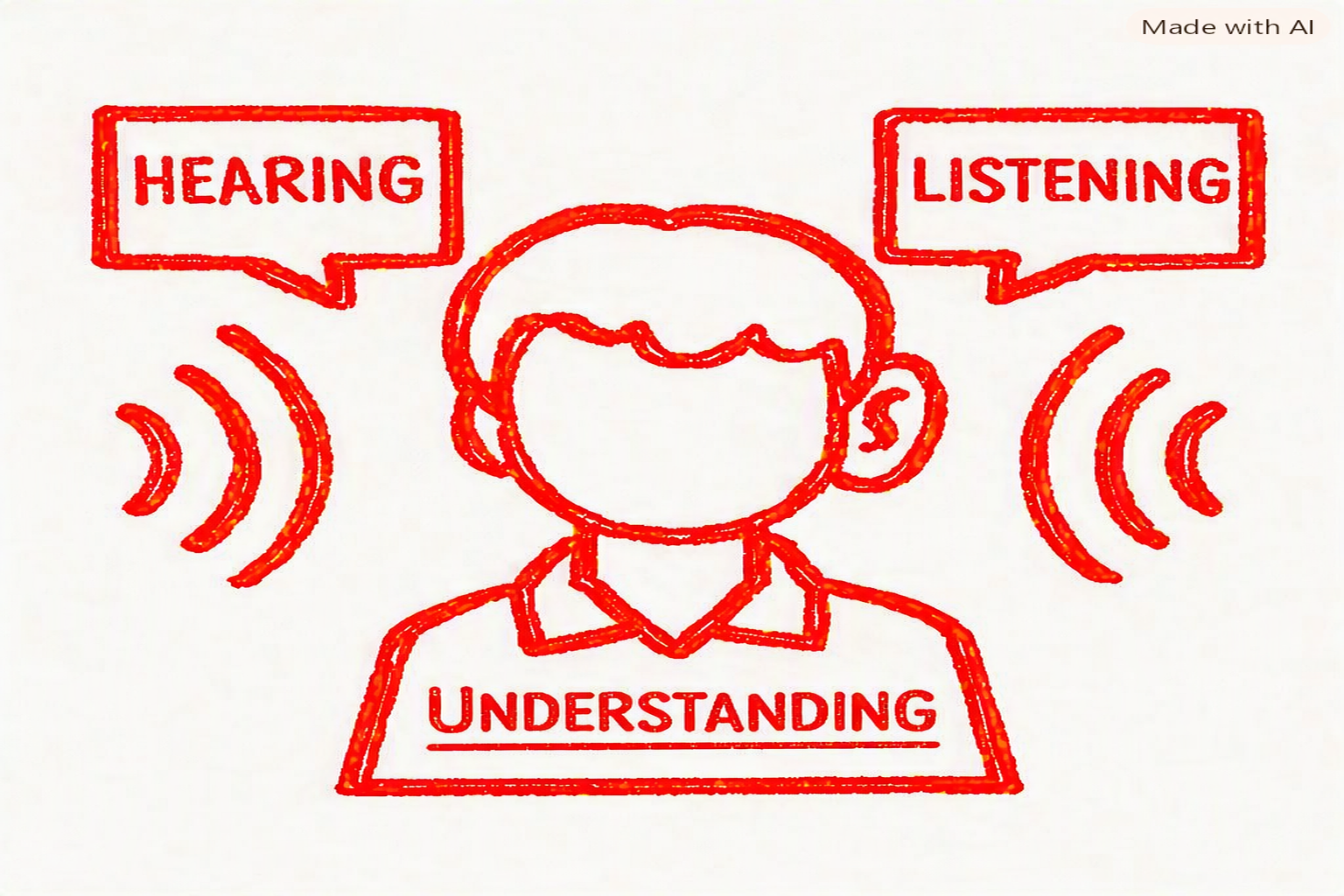
If you are only prepared to start listening once the other person stops disagreeing with you, you’re probably not listening at all!
In our Better Conversations workshops, we often ask participants what skills are needed for a good conversation.
Almost invariably, listening comes first. It’s so true!
Most people think they’re good listeners yet also feel that others don’t listen to them. Do the maths! Chances are we’ve all given someone the experience of not being listened to!
How we use listening, particularly in difficult conversations, can fuel the disagreement or help reduce it.
Are you listening, or focusing on being understood (AKA presenting your defence)?
We often enter difficult conversations believing that the other person needs to understand us. Yet the more determined we are to be understood, the less likely we are to understand them.
When someone challenges our behaviour, questions our judgement or offers what we consider is unfair feedback, our instinct is often to explain, justify or correct.
My reflex response tends to be “But…” Which is really me launching into “Let me explain…”
What’s yours?

One of the biggest barriers isn’t distraction. It’s certainty. When we’re convinced, we already understand the situation, there’s little room to discover something different.
We might remain quiet, nod thoughtfully and allow someone to finish. But internally, we’re already preparing our response.
We’re hearing, but are we listening?
The challenge is to replace the urge to defend or explain with the discipline to understand.
How do you know if you’re actually listening?
Here’s a useful test to apply while the other person is speaking:
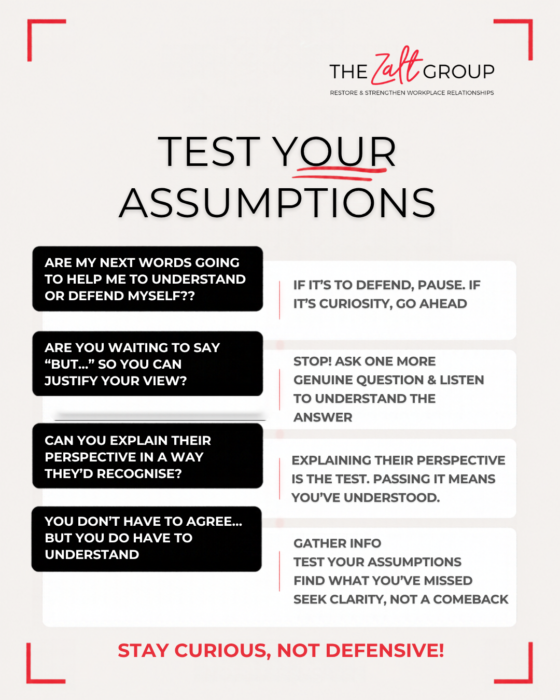
Are my next words going to help me understand, or help me defend?
When I notice myself about to say “but“, it’s a useful warning sign. Am I about to contribute to understanding, or simply defend my position??
Sometimes the most useful thing I can do is replace my explanation with one more genuine question.
And here’s a more demanding test:
Could I explain this person’s perspective in a way they would recognise as accurate, even if I fundamentally disagree with it?
If not, there’s probably more listening to do.
Listening is something you do for yourself!
One of the things I regularly remind people of in mediations is that listening is something you’re doing for yourself, perhaps even more than for the other person.
You’re gathering information, testing your assumptions and developing a more complete understanding of the disagreement. All of which puts you in a better position to respond constructively.
Some of the most significant shifts I see in mediation happen when people stop trying to convince each other and start discovering what they’ve misunderstood. Sometimes they realise they weren’t even disagreeing about what they thought they were. That’s often when I know we’re getting somewhere!
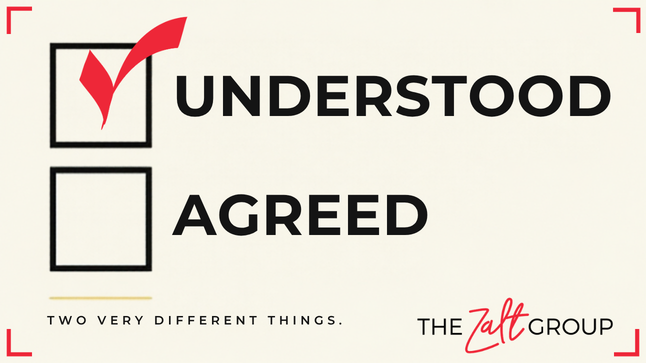
And listening doesn’t require agreement. Sometimes it’s enough to say something like I hadn’t appreciated that was the impact. Or I can understand why you’ve interpreted it that way, although I see things differently.
Listening isn’t agreeing. Nor is it surrendering your judgement. These aren’t concessions. They’re ways of demonstrating understanding while keeping space for different perspectives.
Make the conversation easier, not the issue smaller
Good listening won’t necessarily resolve a disagreement. Nor should it prevent us from challenging inaccuracies, setting boundaries or having difficult conversations about behaviour and performance.
But it can reduce the defensiveness that makes those conversations harder than they need to be. Listening is not a passive act. It’s an active contribution to resolving difference.
Next time you’re in a difficult conversation, notice how much effort you’re putting into being understood. Then ask yourself whether you’ve put the same effort into understanding.
“Because if you’re only prepared to listen once the other person stops disagreeing with you, you’re probably not listening at all!”