Virtual difficult conversations are no longer the exception. They’re the norm. Don’t make the mistake of simply transplanting your face-to-face approach into a Teams or Zoom meeting and hoping for the best. Virtual conversations require a different set of instincts.
While I still believe that, where practical, the most difficult conversations are best held face-to-face, waiting until everyone is in the same room is often unrealistic.
We’ve moved past the question, Should I have this conversation online? The question is now, How do I do it differently because it’s online?
The screen changes the rules. So make sure you are deliberate about your approach.
Every advantage of a virtual conversation comes with a corresponding risk. Physical distance can reduce emotional intensity, helping people think more clearly rather than react defensively. Familiar surroundings can make people feel more comfortable. Screen sharing makes it easier to discuss evidence rather than opinions. Yet those same advantages can also create emotional detachment, make disengagement harder to spot and leave people feeling isolated once the meeting ends.
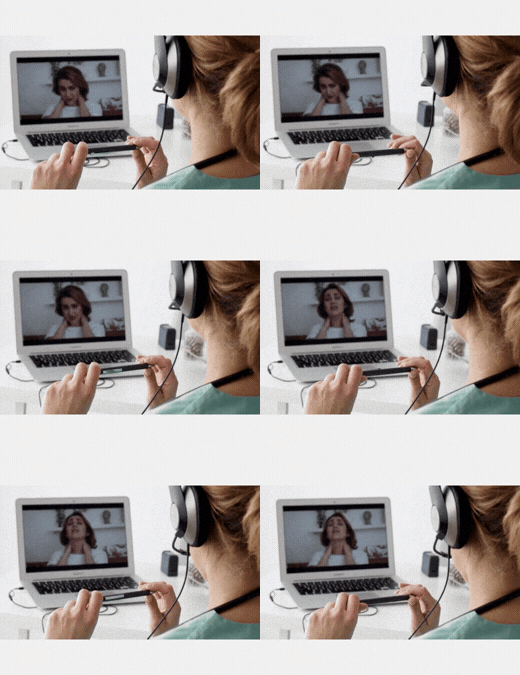
We are facilitating more and more workplace mediations online – here are a few principles that we find make the difference:
- Don’t confuse emotional distance with emotional safety.
Just because someone appears calm on screen doesn’t mean they’re coping well. The screen easily suppresses visible emotion, not the emotion itself. Don’t mistake composure for understanding. One of the traps of virtual conversations is that people often become emotionally quieter rather than emotionally safer. I’ve heard managers reflect on a discussion about performance saying, “They took that really well,” only to discover days later that the employee had felt overwhelmed, confused or deeply anxious. They hadn’t processed the conversation well. They had simply managed their emotions well enough to get through it.
In face-to-face conversations, you’re more likely to notice confusion, hesitation or the moment someone is about to speak. Online, those cues are weaker. As a result, you may leave the meeting thinking, “They understood and agreed,” when in reality they simply didn’t find the right moment to contribute.
- Prepare the conversation, not just the paperwork.
Virtual conversations leave less room to recover from poor preparation. Be clear about your opening, what you want to discuss, the questions you’ll ask, the pauses you’ll allow and the outcome you’re seeking. Structure creates confidence.
Only share documents when they genuinely help understanding. Once you’ve discussed the key point, stop sharing and return to full-screen video. It focuses attention back on the conversation rather than the document.
One employee described it to me perfectly, “My manager just talked at me, using their version of the document as a shield.” So, use documents to support the conversation, not replace it.
- Ask more questions to replace the information you’ve lost.
You simply have less data virtually. You see less body language, less energy and fewer subtle reactions. Compensate by deliberately asking curious questions like “What are you thinking right now?”, “I noticed you went quiet. What’s happening for you?”. The fewer cues you have, the more curious you need to become.
- Slow the conversation down.
Technology introduces tiny delays that change the rhythm of conversation. Leave longer pauses. Summarise more often. Resist jumping in to fill silence (that’s the one I see too often). I’ve noticed that good virtual conversations usually feel slower than good face-to-face conversations, and that’s exactly how they should feel.
5. Design the experience, not just the discussion.

Technology is never neutral. It shapes how people listen, think, respond and connect. The more deliberate you are about the experience you create, the better the conversation is likely to be.
Privacy matters. Camera angle matters. Notifications matter.
Don’t have a performance conversation while walking through an airport or the noise of your child’s soccer training happening in the background. Both of these have been raised during mediations I’ve facilitated. The environment isn’t separate from the conversation. It becomes part of it.
One subtle trap is spending the entire conversation looking at the person’s image rather than the camera. It’s completely natural, but it creates the impression that you’re looking slightly away. During key moments, particularly when acknowledging emotion or delivering an important message, look directly into the camera. It creates a stronger sense of connection than most people realise.
We’ve become so conditioned to video meetings that we’ve forgotten a phone call is sometimes the better medium. If you’ve both spent six hours on Teams, consider asking, “Would you prefer we have this conversation by phone?” Without the cognitive load of being on camera, some people listen more carefully, think more clearly and speak more openly. Zoom fatigue is real.
One final point. We got good at this during COVID but it may have slipped off our radar. Seeing ourselves on screen increases self-consciousness and cognitive load. After a facilitated conversation, one participant said to me, “I was distracted because I knew I had to keep a straight face, so I kept watching my own expressions.” They were managing their image at the same time as processing difficult feedback.
I now routinely say, “If you find yourself distracted by seeing yourself on screen, feel free to hide your self-view. I’ll still be able to see you, but you won’t be watching yourself throughout the conversation.”
- Replace the moments virtual meetings steal.
One of the hidden costs of virtual conversations is that all the informal relationship repair disappears.
In person, conversations taper naturally. People gather their things, exchange a few words and walk back together. Online, many people finish with, “Thanks,” and immediately click Leave.
That abrupt ending can unintentionally feel transactional or even punitive, particularly after a difficult conversation.
Build in a deliberate closing minute. Recap the discussion. Reaffirm the relationship. Ask one final question such as, “How are you feeling about where we’ve landed?” Then, where appropriate, allow the other person to leave the meeting first.
Afterwards, think about the moments that would have happened naturally if you’d been together in person, then recreate them deliberately. Send a short message thanking them for the way they approached the discussion. Call later that afternoon simply to check how they’re travelling. If you’re back in the office the next day, stop by for a brief chat that has nothing to do with the issue itself. None of these interactions are about reopening the conversation. They’re about reinforcing the relationship that sits underneath it.
Virtual difficult conversations aren’t going away. They’re becoming one of the defining leadership capabilities of modern work. We should never let the screen become an excuse for lowering the standard of our communication. Be more intentional about how we communicate when the screen changes the conversation.
Be more deliberate. Your conversations, your relationships and ultimately your culture will be better for it. Zandy Fell – July 2026